The End of Seeking
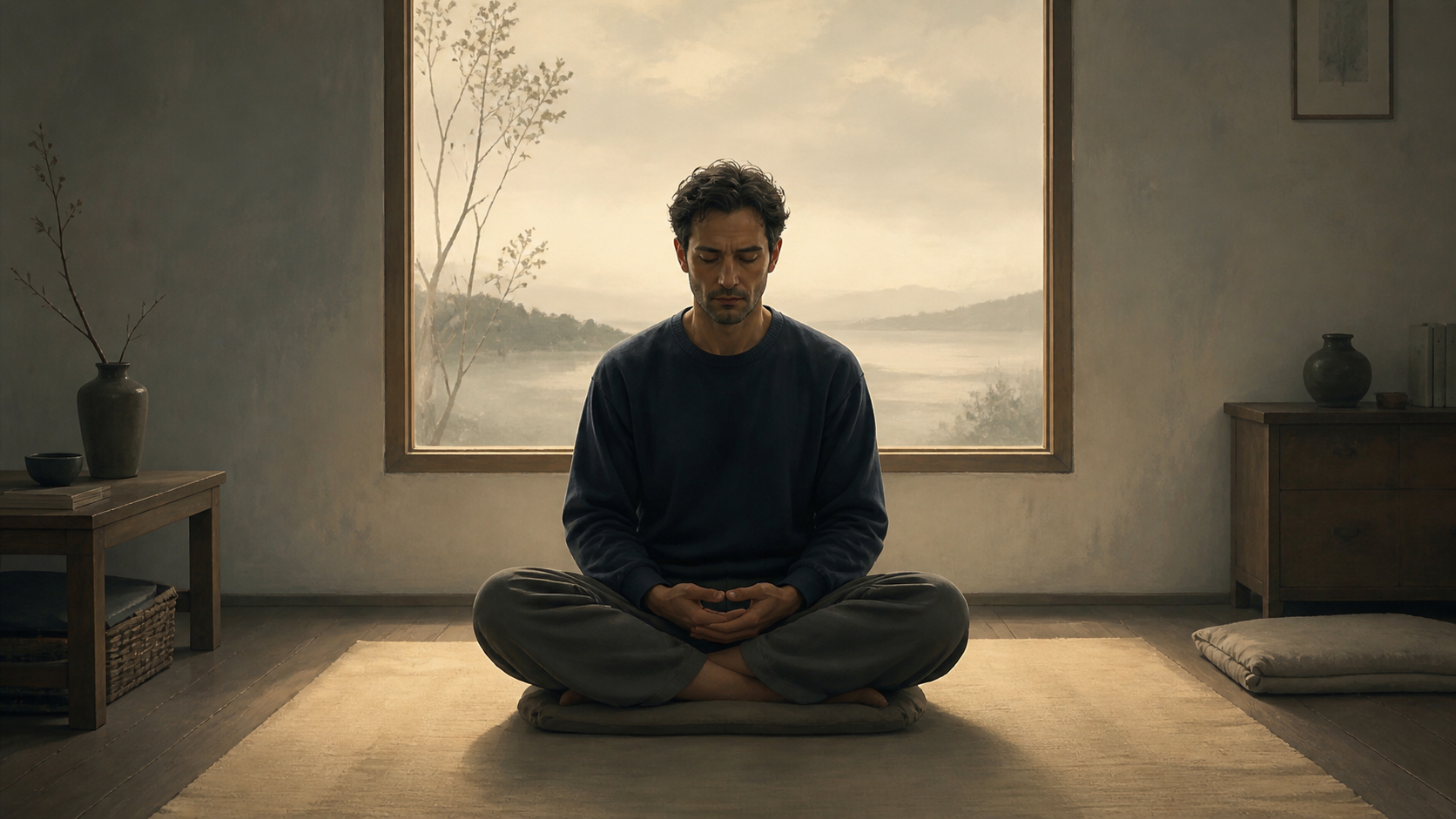
How do we understand the loneliness and disappointment that can appear when meditation no longer feels like a path to somewhere?
A Meditator’s Question:
I’m finding it difficult to describe where I am in practice without creating misunderstanding. Part of me could use words like awakening, and part of me hesitates to use them at all. I’m not writing this to make a claim, defend an attainment, or ask anyone to confirm or deny anything about my practice.
After many years of meditation, something in my relationship to the path has changed. The sense of searching has quieted down. The questions that once drove my practice no longer feel alive in the same way. The expectations I had about where meditation was supposed to lead have mostly fallen away.
What I did not expect is how disappointing this would feel.
For a long time, I imagined that reaching some decisive point on the path would make life feel complete, meaningful, or finally resolved. But life still appears as life. The ordinary facts of existence remain. Experiences arise and pass. Insights arise and pass. Even extraordinary states of mind seem to be only temporary.
So I’m left in a strange place. I don’t feel drawn toward more books, techniques, teachings, arguments, challenges, or spiritual encouragement. At the same time, I feel deeply alone with this.
What I’m really hoping for is contact with another human being who recognizes this territory from the inside. Someone who understands the sense of reaching the end of a long search just to find a sober kind of loneliness.
Oded’s Answer:
First, I want to start by honoring something you said very directly:
“I don’t feel drawn toward more books, techniques, teachings, arguments, challenges, or spiritual encouragement.”
I believe you, and I’ve been visited by a similar sentiment at a challenging point on my own journey. Very much like you, I mostly needed human connection back then, not more intellectualization.
And yet, I also remember the tremendous relief I felt when I learned that the challenging thoughts and emotions I went through were a well-known temporary stage on the spiritual journey, that they were a sign of progress, not the end of the road, and that things could get much better. In hindsight, better than I could possibly have imagined at the time.
So, with great respect to your request, I’ll try to make sense of what you may be going through, sharing both my own experience and what I’ve learned in the years I’ve been traveling the meditative landscape. However, if at any point you feel that my message comes at the wrong timing, or doesn’t address your personal needs, it’s completely okay to set it aside and focus on the social side for now. There’s a time to take refuge in the Dharma, and a time to take refuge in the Sangha. I trust your judgement to find the balance between the two that works best for you.
Here we go.
Since you’ve been meditating for many years, and mentioned extraordinary states, insights, and the possibility of awakening, I assume the difficulty you feel doesn’t stem from a sense of no progress. You’ve probably gone through some notable experiences in meditation and gained certain insights about the nature of reality. Please, correct me if I’m wrong.
You were wise to hesitate before saying whether you did or did not awaken, because it demonstrates a fundamental property of awakening: it is a process of gradual ripening, not a switch that suddenly flips on. Furthermore, there’s a multitude of aspects to awake to, and there can be noticeable tension when some become clear while others don’t. This was the case for me, and it’s what felt most familiar when I read your courageous words.
What I found helpful to make sense of what I was going through was the classical Theravada map of the 16 ñāṇas, or “knowings.” They are “the progress of insight,” common stages we go through as meditators on our way to find nirvana and true peace.
It’s possible that in your years of practice, through direct experience, you’ve learned to know mental and physical states, cause and effect, impermanence, suffering, non-self, arising and passing away, and dissolution. Generally speaking, these are the first five “knowings” of the 16 ñāṇas.
If indeed you are familiar with all I’ve mentioned, you may have reached the difficult territory of stages 6 to 9: the knowings of fear, misery, disgust, and desire for deliverance. While each has its own distinct characteristics, their combination and aftertaste often produce the sense of low point and disappointment you’ve described.
So again, without minimizing your pain, trying to sugarcoat, diagnose, or offer unsolicited optimism, do know that beyond this challenging phase - things do get better.
If we’re determined to keep on training the mind through meditation, or “re-observe,” the difficult effects of the knowings subside, the Insights mature, and we find ourselves meeting the same truths of existence that once caused suffering with tranquility and equanimity.
For what it’s worth, I can assure you that if this kind of maturation was possible for me, even through despair, anxiety, and doubt, I deeply trust that it is possible for you too. It’s a known process, and you’re not alone. Not in the slightest. There are countless human beings in the past, present, and future who go through these same challenges. We’re together in this, even if at times we feel lonely and hopeless.
That’s the main thing I hope you take from my message.
Since you explicitly said you don’t want to talk about techniques at this time, I won’t expand here on the power of samatha to soothe and support the possible pains of vipassana. Meditation instructions can wait for another time.
Instead, let me send you lots and lots of Metta:
May you be free from suffering.
May you be free from ill-will.
May you be filled with loving-kindness.
May you be truly happy.
Oded