Mantra or Breath?
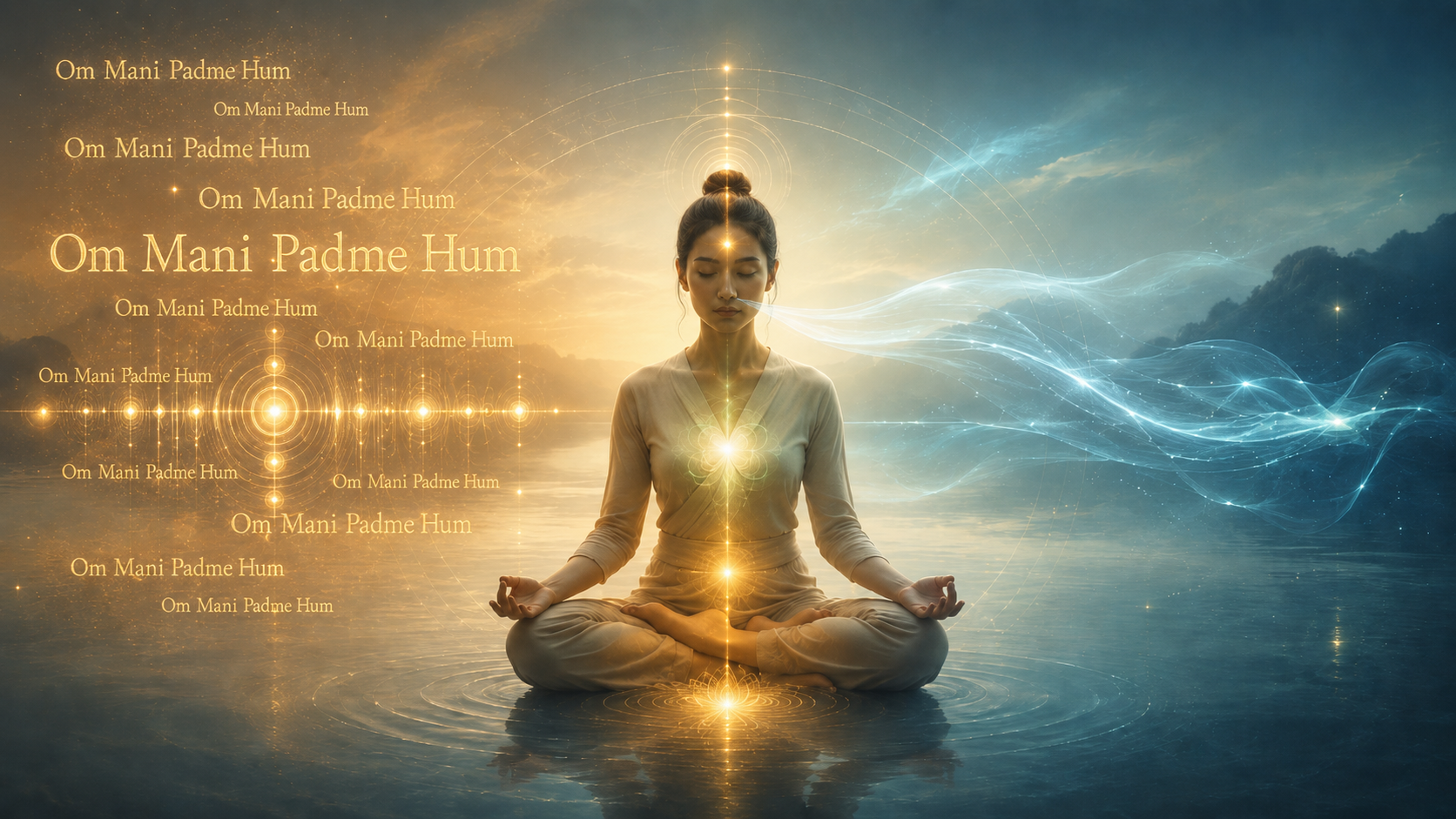
How does mantra compare with the breath as a meditation object?
Note: The following exchange uses several terms from The Mind Illuminated, especially Attention, Awareness, Access Concentration, Subminds, Purification, and Unification of Mind. The main point can still be understood without prior study, but readers familiar with TMI will get the most from this discussion.
A Meditator’s Question:
I’ve been using a mantra for a couple of months, and it seems to help me enter access concentration. It does an amazing job at subduing distractions. As concentration deepens, I also experience strong energetic sensations in the forehead, crown, and tailbone.
At the same time, I’m wondering how mantra meditation compares with using the breath as the meditation object, especially within a samatha-vipassana framework. Does repeating a mantra use attention in a different way than observing breath sensations? Can mantra practice still support the balance of attention and awareness, purification of mind, unification of mind, and Insight? Or might it slow some of those processes down?
I’ve also heard the argument that mantra occupies the discursive mind more actively than breath meditation. But if awareness is well developed, couldn’t a simple mantra run in the background, almost like one instrument in an orchestra, while other processes continue in parallel?
Oded’s Answer:
Before we begin, it’s important to make a clear distinction between two kinds of mantras: those with a meaningful message, such as “I am worthy of love,” and those without one, such as “Om Mani Padme Hum,” “The Jewel in the Lotus.”
Meaningful mantra meditations are powerful, skillful means for shifting an unbalanced mind back to the middle point. If I’m suffering from feeling ugly, I can benefit from meditating on “I am beautiful.” If I’m suffering from feeling poor, “I’m a money magnet” could bring relief. It sends a message to the entire mind system, facilitating change.
My reply will focus mainly on the abstract kind, whose meaning, if any, is less personally specific.
Mantra meditation can indeed be an effective gateway to Access Concentration and the benefits it provides. The energetic sensations you describe (“Pīti currents”) are a good indication of that.
The more important question is what kind of meditative development this practice supports most strongly, and where its limitations may appear. Since mantra meditation takes significant attentional resources, it leaves little room for other subminds in Awareness. This might slow down the processes of Purification and Unification of Mind. Momentarily, subminds might “agree” to let go of their separate agendas in favor of the mantra, but long-term inner conflicts could persist. It might also hinder the maturation of Insight.
To be clear, there’s nothing wrong with mantra meditation; just be aware of its strengths and weaknesses so you can use it in line with your goals.
This is why I wouldn’t frame the main difference as a simple question of whether mantra can shift the balance of attention and awareness in the same way as breath meditation. It’s not a question of attention/awareness balance, as much as it’s an issue of serial/parallel processing. For example, we can have a conversation and walk at the same time, but we can’t have a conversation while singing the Star-Spangled Banner. Similarly, repeating a mantra interferes with the exchange of discursive thoughts, plans, and memories. It’s both its power and its downside.
Another key difference lies in the kind of resources we use for the practice, and their scope. To explore this aspect, let’s first make a clear distinction between “mental resources” and “attentional resources.” While repeating a mantra is fairly easy and doesn’t require many mental resources, especially compared to playing chess or composing a symphony, it does take a lot of attention. It’s a form of “doing” rather than “observing.” The mind fabricates a sequence of syllables over and over again. It’s “busy,” and therefore less available or attentive to what other subminds have to say.
By analogy, a child is less likely to reach out to a parent who is delivering a presentation on Zoom, which is like repeating a mantra, than to a parent watching television, which is more like following the breath.
This is the sense in which mantra practice can affect Purification and Unification differently from breath meditation. Unification and Purification require “empty mental space.” Observing the breath creates space. Repeating a mantra fills space.
As for subduing distractions, it is indeed one of the goals of the practice, whether we use the breath or a mantra as the meditation object. But the way the training happens can be quite different. Subduing distractions is achieved by directing and redirecting attention between distractions and the meditation object. I like to see it as lifting free weights: we pick them up and put them down, getting distracted and returning to the breath, and so become stronger. With mantra meditation, it’s more like holding a big pillow. Our hands may be full, but the challenge is profoundly different.
This brings us to the question of whether a simple mantra can run in the background while other mental processes continue in parallel. To understand what’s happening, it helps to first distinguish between a “task” and the sub-tasks that make it up. Let’s use the musical example you gave to explore it.
When a drummer is playing multiple rhythms with different limbs, it is an advanced performance of a single task: playing the drums. A specialized rhythmic sub-mind coordinates several smaller sub-minds, each controlling a different limb. This involves both parallel and serial processing.
At the neurological level, some specialized sub-minds can operate in parallel, for example, walking and talking. But a single specialized sub-mind must alternate between tasks that compete for its processing, for example, listening to a podcast while reading a book.
Back to the drummer: a skilled player can use different limbs to perform complex rhythms within one song. But if two different songs play simultaneously at different tempos, attention must shift between them. The drummer cannot fully sync with both at the same time, so attention alternates. The same is true when playing piano and guitar simultaneously. Multiple instruments - yes. Multiple songs? Not so much. Similarly, people can talk and sign the same message, but it’s much harder to say one thing and sign another.
So, in short, what looks like “multitasking” is usually either well-trained sub-minds running in parallel or attention moving very quickly between elements of a single integrated task. The mind can coordinate many processes at once, but attention itself still samples experience moment by moment. From a TMI perspective, drumming is not true multitasking in the sense of holding multiple objects in attention simultaneously - it’s the seamless orchestration of many sub-processes within one unified attentional frame.
In conclusion, mantra meditation can be a valid and powerful practice, especially for reaching Access Concentration, experiencing Piti, or intentionally transforming core beliefs about ourselves and the world. However, within a samatha-vipassana framework, breath meditation has a unique advantage: it trains attention while leaving more space in awareness for purification, unification, and Insight to mature.
With Metta,
Oded